Membrane repairs
Compatible repair methods for TPO, PVC, EPDM, modified bitumen, and built-up roof systems.
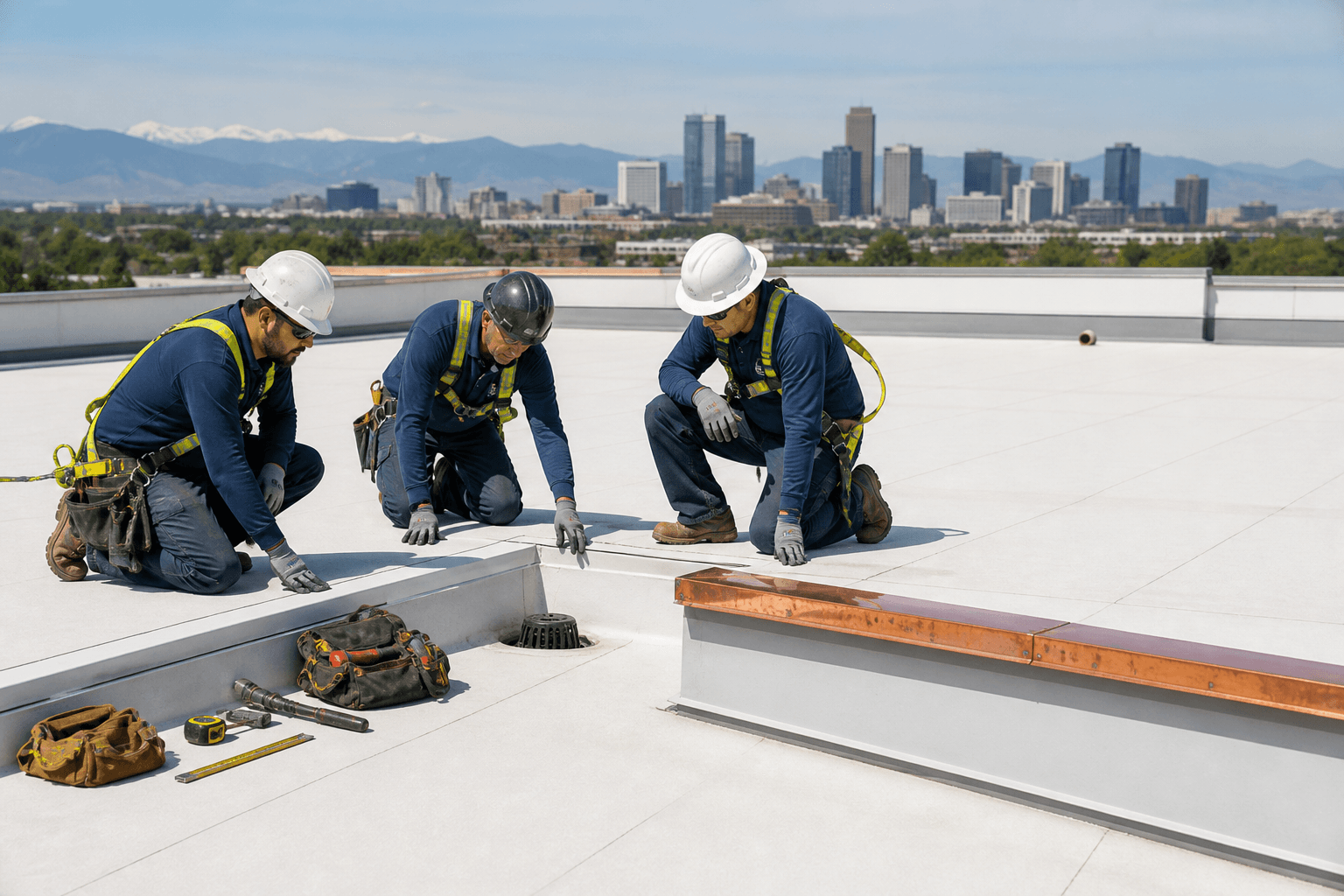
Low-slope roofing
Low-slope roofs depend on clean drainage and continuous waterproofing. Small seam or flashing failures can spread moisture beneath the surface, so repair starts with understanding the system and its wet area.
What we look after
Practical flat and low-slope roof repair for seams, penetrations, drainage issues, punctures, edge details, and aging membranes.
Compatible repair methods for TPO, PVC, EPDM, modified bitumen, and built-up roof systems.
Focused work at curbs, walls, penetrations, drains, scuppers, and edge metal.
Evaluation of blocked drains, low areas, and water pathways that add stress to the roof.
A short-term repair can be paired with a maintenance or replacement horizon when needed.
The whole assembly
Flat roofs are not truly flat; they need slope to move water toward drains or edges. Ponding, debris, foot traffic, rooftop equipment, and heat cycling all affect the membrane over time.
The right repair method must match the existing system. Surface patches made with incompatible products can make later work harder and may not bond through Denver temperature swings.
Ask about your roofWhat the process gives you
The goal is not only to complete work. It is to make the condition, the recommendation, and the next step easier to understand.
Repair materials and preparation are selected for the existing roof type.
We look beyond the opening to the water flow and nearby stress points.
Understand whether repair, maintenance, restoration, or replacement is the sound path.
The path forward
We document the roof, the details around it, and the symptoms you have noticed.
You receive plain-language findings, priorities, options, and the tradeoffs between them.
The scope defines materials, preparation, property protection, timing, and next steps.
Work moves through setup, installation or repair, cleanup, and a final walkthrough.
Flat Roof Repair questions
The roof itself determines the final recommendation, but these answers can help you prepare.
Start a conversationWater that remains well after a storm can accelerate wear, collect debris, and reveal drainage or slope issues. The depth, duration, and roof system determine the appropriate response.
Often, yes. Localized wet or damaged areas may be repairable when the surrounding assembly is sound. Broader saturation or widespread aging may change the recommendation.
A spring and fall review, plus an inspection after major weather or rooftop work, helps catch debris, open seams, and drainage issues early.
Start with the facts